The Work That Happens When Nobody's Watching
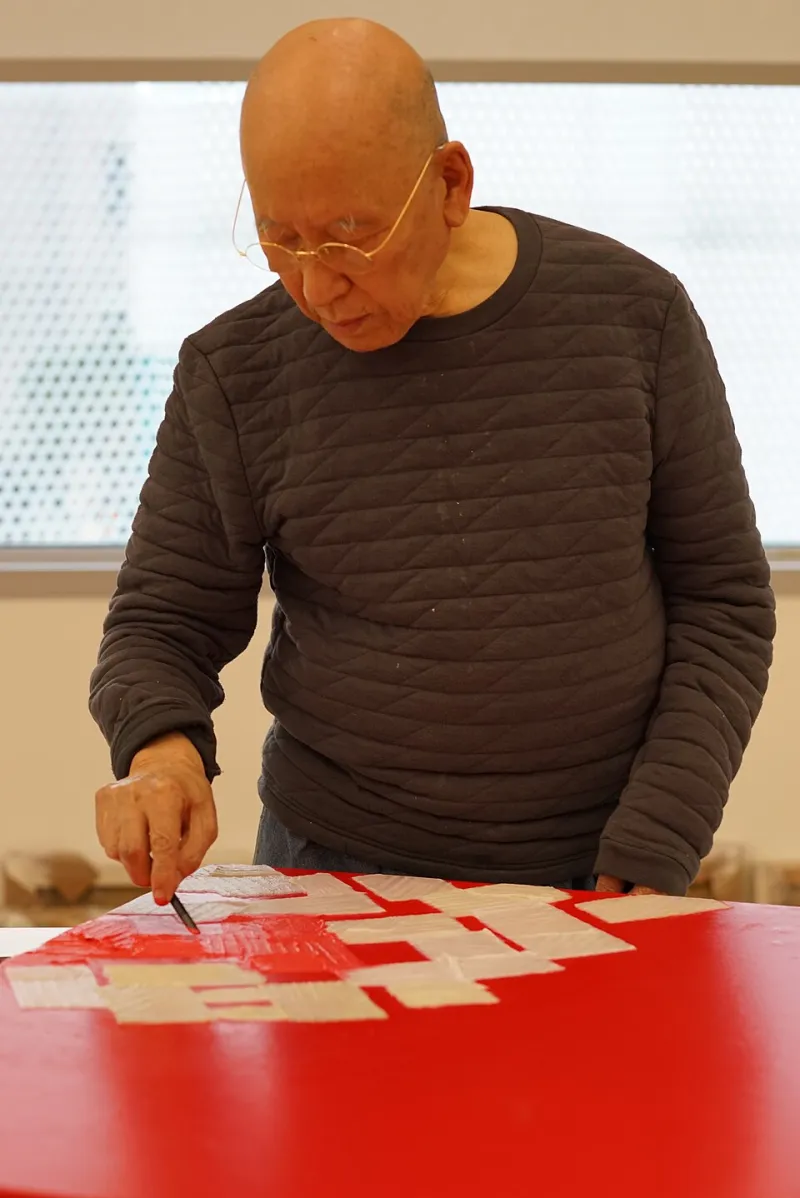
Photo: 선의의 바람, CC BY-SA 4.0, via Wikimedia Commons
The Performance Problem
Somewhere along the way, making things and talking about making things became almost indistinguishable. Open any creative community online and you'll find the same rhythm: a project gets started, the behind-the-scenes content begins immediately, the audience grows alongside the work, and by the time the final product ships, it's already been pre-digested through a hundred updates, threads, and story posts.
There's a logic to this. Audiences built during the process are warm by launch day. Transparency creates trust. Showing your work humanizes you in a landscape full of polished, impersonal content. These are real benefits and smart people have built real careers on them.
But there's a question worth sitting with: what happens to the work itself when it's being documented in real time? And what are you giving up when the process becomes the product?
What Building in Public Actually Costs
The documented creative process is, by nature, a performance. Not a dishonest one necessarily — but a performance in the sense that you're always making choices about what to show, how to frame it, and what narrative it fits into. That editorial layer sits on top of the actual work, and it doesn't sit quietly.
When you commit to sharing your process publicly, you introduce an audience into the room before the work is ready for one. That changes things. You start making decisions — sometimes consciously, sometimes not — based on how they'll read on camera. You avoid the messier experiments that would be hard to explain. You rush through the slow, formless phases because they don't make for compelling content. You reshape the work to fit the story you've been telling about it.
None of this is cynical. It's just what happens when you add an observer to any system. The observer changes the thing being observed. In creative work, that effect can be significant.
The Quiet Ones Are Shipping
Meanwhile, there's a less visible cohort of creatives who have opted out of the documentation game entirely. They're not building audiences during the process. They're not sharing sneak peeks or progress threads. They're just working, revising, scrapping things that aren't good enough, starting over when necessary, and eventually shipping something that's been allowed to become fully itself without an audience watching over its shoulder.
These aren't recluses or luddites. Many of them understand the value of audience-building perfectly well. They've just made a deliberate choice to protect the integrity of the process, even at the cost of the promotional runway that building in public provides.
And the work often shows it. There's a quality difference — harder to quantify but easy to feel — between creative output that's been developed in private and work that's been shaped by public reaction at every stage. The private work tends to be more coherent. More committed to its own internal logic. Less obviously designed to perform.
The Obsession with Proof of Process
Part of what drives the building-in-public compulsion is a cultural anxiety about credibility. If you can't show your work, did you really do it? If there's no behind-the-scenes footage, no newsletter documenting the journey, no community watching in real time, how do you prove the depth of your effort?
This is an anxiety worth examining. Because the implicit assumption — that process documentation is evidence of serious creative work — is kind of backwards. The most serious creative work in history happened almost entirely in private. The drafts, the failures, the pivots, the slow accumulation of judgment — none of it was documented for an audience. The thing that proved the depth of the effort was the quality of the finished work.
Documentation is a marketing tool. A useful one in the right context. But it's not a substitute for craft, and treating it like one has produced a generation of creatives who are excellent at narrating their process and inconsistent at completing it.
Giving Yourself Permission to Disappear
If you're someone who's been defaulting to building in public because it feels like the responsible, strategic thing to do — you have permission to stop. Or at least to pause.
Try working on something without telling anyone about it. No progress updates. No sneak peeks. No newsletter section dedicated to "what I'm working on." Just the work, the revision, the slow process of figuring out what the thing actually wants to be.
Pay attention to what changes. Most people who try this report the same few things: the work gets weirder and more personal, the risk-taking increases, the pressure to deliver a certain kind of outcome relaxes, and the finished product feels more genuinely theirs.
Obscurity, it turns out, is a pretty good creative environment.
When to Share and When to Shut the Door
This isn't a blanket argument against building in public. For some creatives, in some contexts, it's genuinely the right call — both strategically and creatively. The key is making the choice deliberately rather than defaulting to documentation because that's what everyone else seems to be doing.
A few questions worth asking before you commit to public process documentation: Does sharing the process actually serve the work, or just the marketing? Is the audience you're building during the process the same audience that will value the finished product? Are you willing to let public reaction reshape what you're making, and if so, is that a feature or a bug?
The best creative work tends to arrive from a place of genuine conviction — a clear sense of what the thing is trying to do and a willingness to protect that vision through the messy middle. Sometimes the best way to protect it is to keep the door closed until it's ready.
The internet will still be there when you come out.