Every Tool You Didn't Need: The Hidden Cost of Keeping Up with Other Creatives

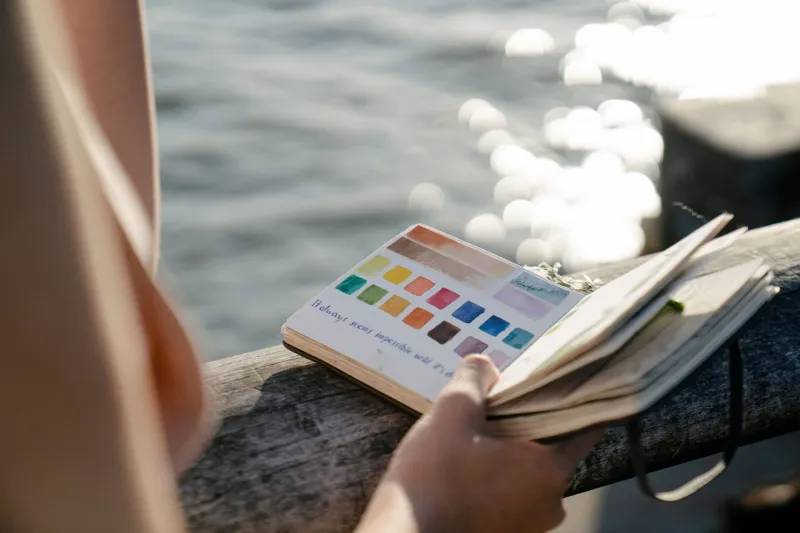
Photo by Photo by Natalie Toombs on Unsplash on Unsplash
The Invoice Nobody Sends You
At some point, almost every working creative hits a weird financial wall. Not because the work dried up. Not because they made a bad business decision. But because somewhere between scrolling through YouTube setups, watching gear reviews, and clicking through another creator's carefully curated studio tour, they started spending money to feel legitimate.
Call it the comparison tax. It's the premium you pay — in dollars, in time, in focus — just to feel like you belong at the table. And unlike actual business expenses, it rarely shows up as a line item you can justify. It just quietly bleeds you out.
The brutal irony is that creatives tend to be pretty self-aware people. We know intellectually that the guy with the $4,000 camera rig isn't necessarily making better work than someone shooting on an iPhone. We've read the essays. We've nodded along to the podcasts. And then we go buy a plugin we'll use twice because someone we admire mentioned it offhand in a newsletter.
How the Pressure Actually Works
The mechanism behind comparison spending isn't stupidity — it's something closer to social mimicry. When you're embedded in creative communities online, you're constantly absorbing signals about what "professional" looks like. The tools people name-drop, the software stacks they show off, the courses they swear changed their careers. Over time, these signals stop feeling like options and start feeling like prerequisites.
Psychologists have a term for this: social proof. We use other people's choices as shortcuts for our own decision-making, especially when we're uncertain. And creative work is basically a permanent state of uncertainty. You're never totally sure if you're good enough, equipped enough, or current enough. So when someone you respect casually mentions they switched to a new project management tool or upgraded their audio interface, your brain files that away as evidence that maybe you should too.
The result is a spending pattern that has nothing to do with your actual workflow gaps and everything to do with managing anxiety about where you stand.
The Real Price Tag
Let's talk numbers for a second, because this stuff adds up faster than you'd think.
A mid-tier creative who's moderately plugged into their field might spend anywhere from $200 to $800 a year on subscriptions to software they barely open. Add in a course or two purchased impulsively during a launch — maybe $300 to $1,500 — and the occasional hardware upgrade that felt urgent but wasn't, and you're looking at a meaningful chunk of money going toward what is essentially comparison management.
But the financial cost is only half of it. The other half is cognitive. Every new tool you adopt carries an onboarding tax. There's time spent learning it, integrating it, deciding whether to stick with it. Every course you buy but don't finish creates a small weight of unfinished obligation. The mental overhead of maintaining a bloated toolkit is real, and it competes directly with the headspace you need to actually make things.
Distinguishing Investment from Imitation
Here's the framework I've found actually useful for drawing the line between a smart investment and a comparison-driven purchase.
Ask what problem it solves, not what it signals. Before you buy anything, try to articulate the specific friction in your current workflow that this thing addresses. Not in vague terms like "it'll make me more professional" — in concrete terms. "I lose two hours a week doing X manually, and this tool automates it." If you can't name the problem, you're probably buying a feeling, not a solution.
Give it a 30-day waiting period. Most comparison-driven purchases feel urgent in the moment and completely optional a month later. If you still want the thing after 30 days, and you can still articulate the problem it solves, it's probably a real need.
Audit what you're already paying for. Pull up every subscription and recurring charge tied to your creative work. Be honest about what you actually use. Most people are carrying two or three tools that overlap in function with something else they own. Consolidate before you add.
Track where you heard about it. This one sounds simple but it's revealing. If the answer is "someone I follow online mentioned it" rather than "I researched it because I had a specific need," that's a flag worth taking seriously.
The Confidence Play Nobody Talks About
There's something almost countercultural about deciding your current setup is enough. In a creative landscape that runs on upgrade culture and perpetual optimization, committing to mastery of what you already have is a genuinely radical move.
And here's what tends to happen when creatives stop chasing the next tool: they get better at the ones they have. Depth of skill with familiar instruments almost always beats breadth of familiarity with a bunch of new ones. The photographer who's shot 10,000 frames on the same camera body knows things about that tool that no amount of reading can teach. That knowledge compounds.
The comparison tax doesn't just cost money. It costs depth. Every time you redirect your learning energy toward a new acquisition, you're pulling it away from the slow, unglamorous work of getting genuinely good at something.
Spending That Actually Moves the Needle
None of this means you should never invest in your work. Some tools genuinely are game-changers. Some courses deliver real, lasting value. The goal isn't austerity — it's intentionality.
Spend on things that remove genuine friction from your workflow. Spend on skills that have a clear connection to work you want to be doing more of. Spend on quality in the places where quality actually shows up in your output. And be honest enough with yourself to tell the difference between those things and the purchases you're making because someone else's setup made you feel like yours wasn't enough.
The creative work itself doesn't care what gear you used to make it. Your audience doesn't either. The only real benchmark is whether the work does what it's supposed to do — and no amount of tool-chasing will substitute for the time you spend actually making things.