Other People's Highlight Reels Are Quietly Dimming Your Own Light
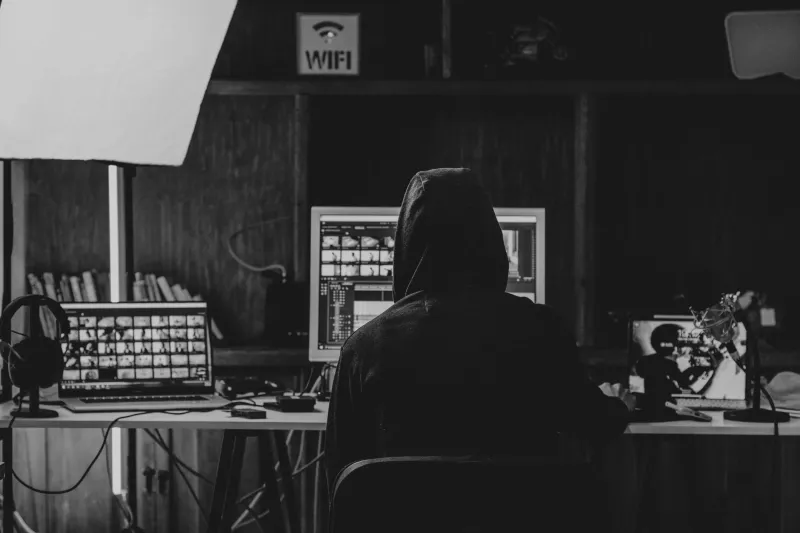
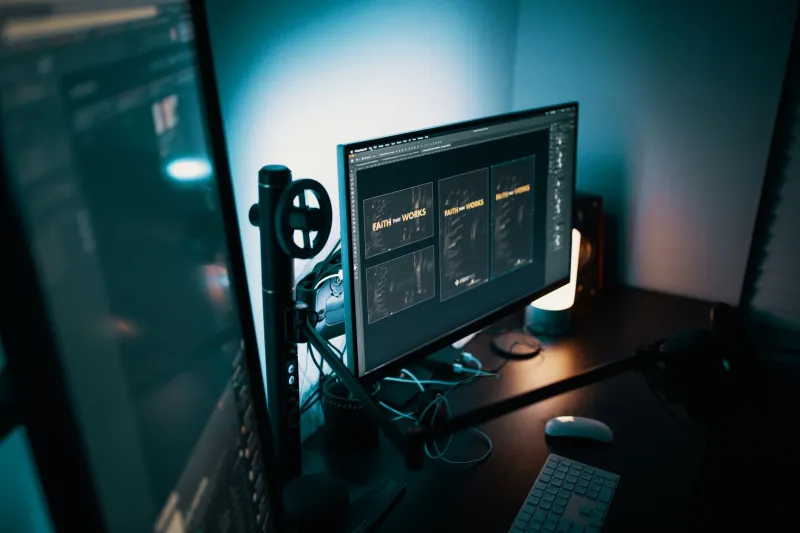
There's a ritual a lot of creatives do without even realizing it. You sit down to work, you feel a little uncertain about where to start, and so you do what feels productive: you open Instagram, Behance, Dribbble, or whatever corner of the internet houses the people doing work adjacent to yours. You tell yourself you're getting inspired. You tell yourself you're staying current.
But somewhere between the third and seventh portfolio you click through, something shifts. The idea you had this morning — the one that felt genuinely exciting — starts to look a little small. A little derivative. A little not enough.
That's not inspiration. That's erosion.
The Psychology Behind the Scroll
Here's the thing: comparison isn't a character flaw. It's deeply wired into how humans measure themselves in social environments. Psychologist Leon Festinger mapped this out back in the 1950s with his social comparison theory — we gauge our abilities and opinions partly by stacking them against others. In a pre-internet world, your comparison pool was limited. You saw the work of people in your immediate circle, your local scene, maybe a few national publications.
Now? You're comparing yourself to the entire planet's top ten percent, curated by algorithms designed to surface the most arresting, most polished, most engagement-worthy content available. That's not a level playing field. That's you showing up to a footrace and discovering everyone else is in a sports car.
Research backs this up in uncomfortable ways. Studies on creative performance have consistently found that upward social comparison — looking at people doing better than you — tends to generate one of two responses: motivation or deflation. The deflation side wins more often than creatives like to admit, especially when the comparison is ongoing and ambient rather than intentional and time-limited.
When deflation sets in, it doesn't always look like paralysis. Sometimes it looks like overcompensating. You start chasing aesthetics that aren't yours. You pivot your style toward whatever seems to be performing well in your feed. You sand down the weird, specific edges of your work — the parts that are most distinctly you — because those are exactly the parts that look most different from the polished mainstream.
And just like that, your work gets safer. More palatable. Less interesting.
The Invisible Pressure Nobody Talks About
What makes this particularly tricky is that the pressure is invisible. Nobody is telling you to change. No client is demanding you look more like someone else. The influence operates below the surface, in the accumulation of thousands of micro-impressions that slowly recalibrate what feels normal, what feels ambitious, what feels worth pursuing.
Creatives who work in visual fields — design, photography, illustration — often feel this most acutely. When you're steeped in a visual language long enough, it starts to feel like the only language. Writers face a version of it too, absorbing sentence rhythms and structural habits from the authors they're constantly reading until their own voice starts to echo someone else's cadence.
The cruel irony is that the work you're most drawn to in other people is usually the work that feels most distinctly theirs. You admire their specificity. Their point of view. The unmistakable quality that makes their stuff recognizable from a thumbnail. And then you go try to make something and unconsciously try to replicate that unmistakable quality — which, of course, immediately makes your work feel like a knockoff.
Staying Inspired Without Getting Swallowed
None of this means you should live in a creative bunker, cut off from the world. Isolation has its own problems — you stop growing, stop being challenged, stop discovering the unexpected connections that come from bumping up against unfamiliar work. The goal isn't to stop looking. It's to look differently.
Set intentional windows, not ambient exposure. There's a big difference between sitting down for thirty deliberate minutes to study work you admire versus passively scrolling for an hour while your brain is supposedly warming up to create. The first is active and bounded. The second is just marinating in other people's decisions until yours start to look like theirs.
Diversify your inputs radically. If you're a graphic designer, stop looking exclusively at graphic design. Go deep on ceramics, architecture, vintage scientific illustration, the color palette of 1970s American roadside signage. The further your influences are from your output category, the more original the synthesis tends to be. Your work should be traceable to things that surprise people.
Create before you consume. This one's simple and it works. Make it a rule that you don't look at anyone else's work until you've put something on the page, the canvas, or the screen first. Even if it's rough. Even if it's just a sketch or a paragraph. Getting your own signal out first means it has a chance to exist before the noise arrives.
Audit your feed like it's a budget. You audit your finances to make sure money is going where it should. Do the same with your attention. Look at who you follow and ask honestly: does this person's work expand my thinking, or does it just make me feel behind? Both are real outcomes, and only one of them is serving you.
Reconnect with why you started. Go back to the early stuff — your first attempts, your original obsessions, the work you made before you knew enough to be self-conscious about it. That material is embarrassing, sure, but it's also honest. It holds clues about what actually drives you that years of professional polish may have buried.
The Distinctive Voice Problem
Here's the real thing worth sitting with: a distinctive creative voice doesn't come from consuming the right influences. It comes from trusting the specific, sometimes awkward, sometimes uncommercial combination of everything you are. Your background, your weird fixations, your regional sensibility, the specific way your brain makes connections.
That stuff is genuinely irreplaceable. Nobody else has your exact configuration. But it takes quiet to hear it. It takes some deliberate distance from the constant referendum of the internet to let your own signal come through clearly.
The creators whose work you actually remember — the ones with a real point of view — weren't the ones who watched the most and absorbed the most and replicated the most skillfully. They were the ones who figured out what they actually thought, and then had the nerve to make work from that place.
That's the whole job, really. And you can't do it while you're busy measuring yourself against everyone else's finished product.
Put the phone down. Make the thing. Look at the world later.