Good Taste Is a Head Start, Not a Verdict
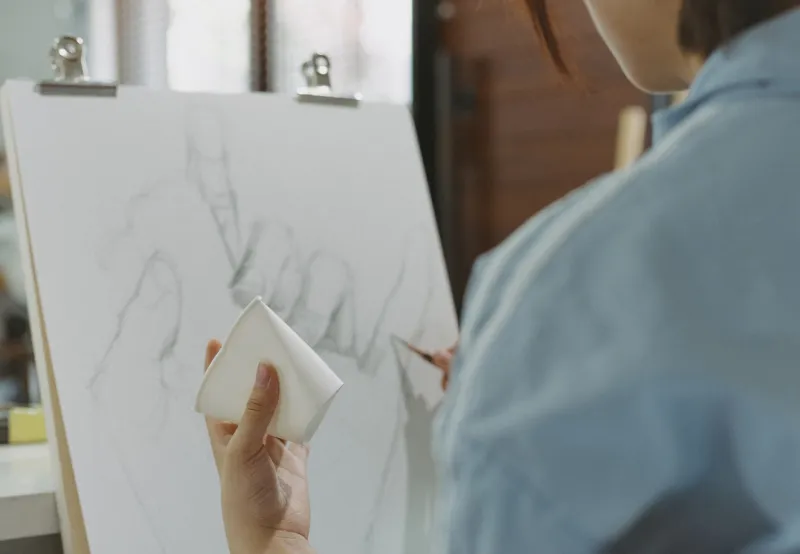
Ira Glass said it years ago in an interview that's been clipped and shared so many times it's practically wallpaper at this point. The gist: when you're starting out, your taste is more developed than your ability. You can feel that the work isn't good yet. That feeling is the gap.
People quote it constantly. Fewer people actually sit with what it means.
Because here's the thing — having taste that outpaces your current skill level isn't a consolation prize. It's not something to tolerate on the way to getting good. It's actually one of the clearest signals that you're wired for this, that your creative instincts are calibrated correctly, and that the path forward is real and navigable.
The problem is that most people experience the gap as failure. And that misreading causes them to stop.
Why the Gap Feels So Brutal
When you can hear that a mix sounds amateurish, see that a composition is flat, feel that a sentence lands wrong — and you can't yet fix it — the experience is genuinely painful. Not metaphorically. There's real frustration in perceiving quality and not being able to produce it on demand.
This is different from not caring. Someone without developed taste doesn't suffer this way. They make something, it feels fine to them, they move on. The gap only hurts if you can actually perceive it.
So in a strange way, the pain is proof. You're not struggling because you lack instinct — you're struggling because your instinct is working. Your internal quality detector is running ahead of your technical execution, and the friction between them is what the gap feels like from the inside.
The mistake is interpreting that friction as evidence that you don't belong here. It's actually evidence of the opposite.
What Developed Taste Actually Looks Like
Taste isn't just liking good things. Everyone thinks they like good things. Developed taste is the ability to analyze why something works — to break down the mechanics of quality, to feel when something is almost right versus genuinely right, and to recognize the specific moves that separate competent from excellent.
That kind of discernment takes time and attention to develop. It comes from consuming a lot of work in your field, studying it seriously, developing opinions and then pressure-testing them. Most people who have it don't fully realize how much work went into building it.
If you're the person in the room who can tell when something is off before anyone else names it — if you finish a project and already know which parts aren't working even before you get feedback — your taste is ahead of the curve. That's an asset. The job now is to let your technical skill catch up.
The Practical Work of Closing the Distance
Knowing the gap exists is one thing. Closing it is another. Here's what actually moves the needle:
Volume with intention. You have to make a lot of work to develop the muscle memory and technical range to execute on what your taste demands. But volume alone isn't enough — you have to be paying attention while you work. What specifically isn't landing? Where does the execution break down? Get specific about the gap rather than just feeling it generally.
Isolate the technical deficits. Taste is holistic; skill is granular. If your design work feels flat, the issue might be color, hierarchy, spacing, or all three — but probably not all three equally. Figure out which specific technical skill is the current ceiling and work on that thing directly, not just the finished product.
Study how people you admire solved the same problems. Not to copy — to understand the mechanics. When a piece of work you love does something you can't yet do, reverse-engineer it. What decision did they make? What did they probably try first? What did they leave out? This is different from inspiration-scrolling. It's technical analysis.
Finish things you know aren't good yet. This is the hardest one. When your taste tells you the work isn't there, the instinct is to abandon it or keep tinkering indefinitely. Resist both. Finish it, note what didn't work, and move to the next one. Completion builds the kind of momentum that endless revision destroys.
Shrink the scope until execution can meet taste. Sometimes the gap isn't about skill level overall — it's about attempting something whose scope exceeds your current range. A smaller, tighter project executed with precision will teach you more than a sprawling project you can't fully control. Work at the edge of your ability, not two levels past it.
The Part Nobody Talks About
Here's something worth sitting with: the gap never fully closes. Taste keeps developing. As your skills improve, your sense of what's possible expands too, and the ceiling moves up. The best creatives in any field still feel the distance between what they're making and what they can imagine making.
The difference is that they've made peace with that distance. They've learned to treat it as fuel rather than verdict.
At a certain point, the gap stops feeling like failure and starts feeling like direction. It tells you where to go next. It's the compass that keeps pointing toward better.
The people who quit when they feel the gap most acutely are the ones whose taste was actually telling them something true — that they were capable of more. They just misread the message.
Keep Making the Work
If your taste is ahead of your current output, that's not a reason to wait until you're ready. There is no ready. There's just the next piece, and the one after that, and the slow accumulation of reps that eventually brings execution closer to vision.
Your taste is not mocking you. It's showing you where you're going.
That's worth something. Keep going.